How Scriptorium: Master of Manuscripts Illuminates the Margins of Medieval Art
Scriptorium not only makes an obsolete, long dead art accessible to a modern audience, but miraculously brings it back to life for a brief moment
Approaching a medieval manuscript can feel like you’re running head-first into a closed portcullis. Even if you’re able to decipher the intricate Gothic script and know your way around Latin or some earlier stage of a vernacular language, there’s still the alien visual conventions and cultural context to grapple with.
Ironically, the one thing that’s most approachable to us today is also one of the most puzzling aspects of illuminated manuscripts: Prancing around in the margins of the text, growing from extravagant decorative vines like strange fruit, or nestled within spacious initials, we encounter an unending parade of peculiar monsters, hybrids and animals that are up to all manner of hijinks. There are stags playing the harp, jousting bunnies riding on snails, lobster-knights, tiny dragons with human heads, foxes in bishop’s attire and many, many more which are too weird to even begin to describe.
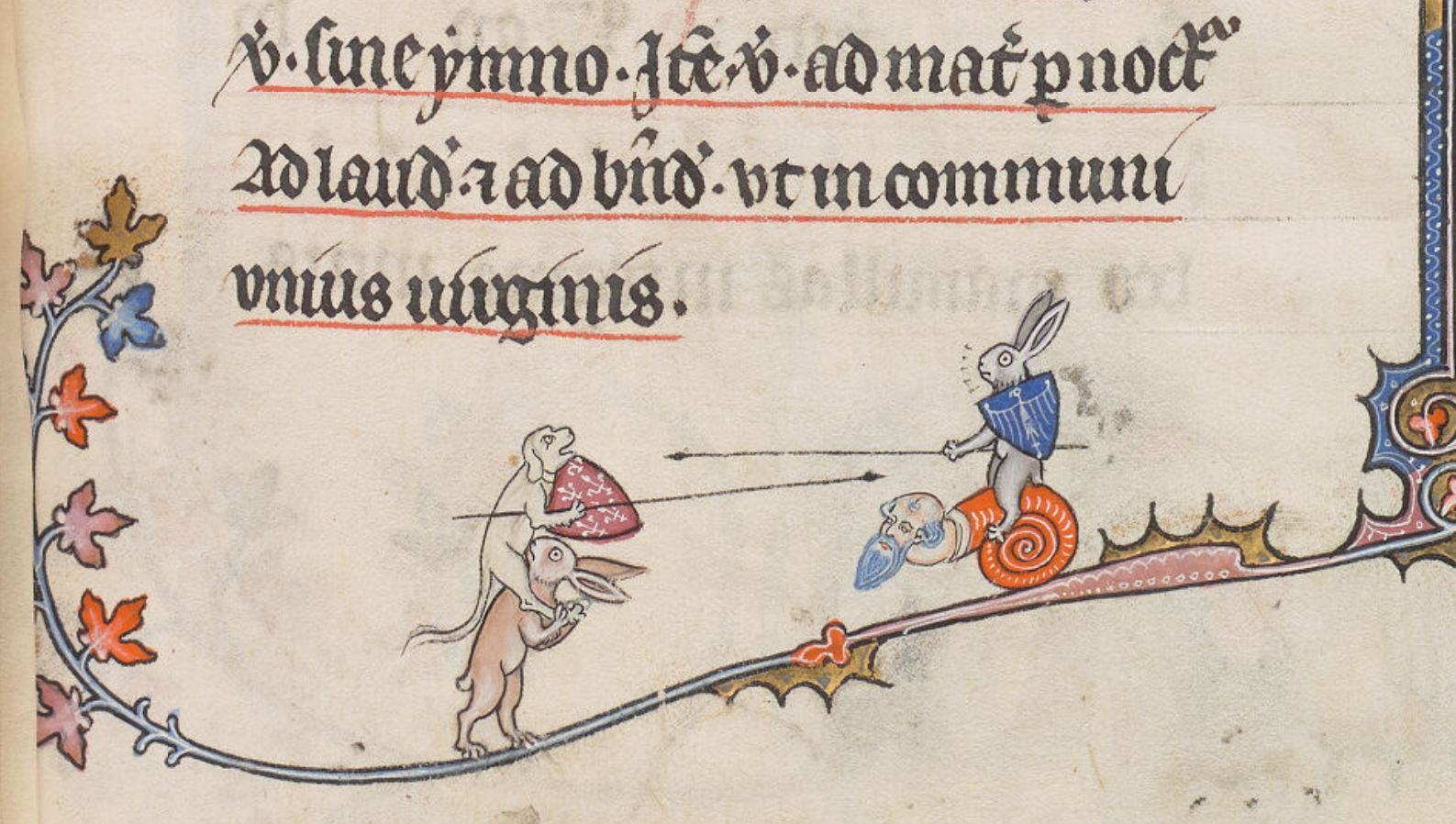
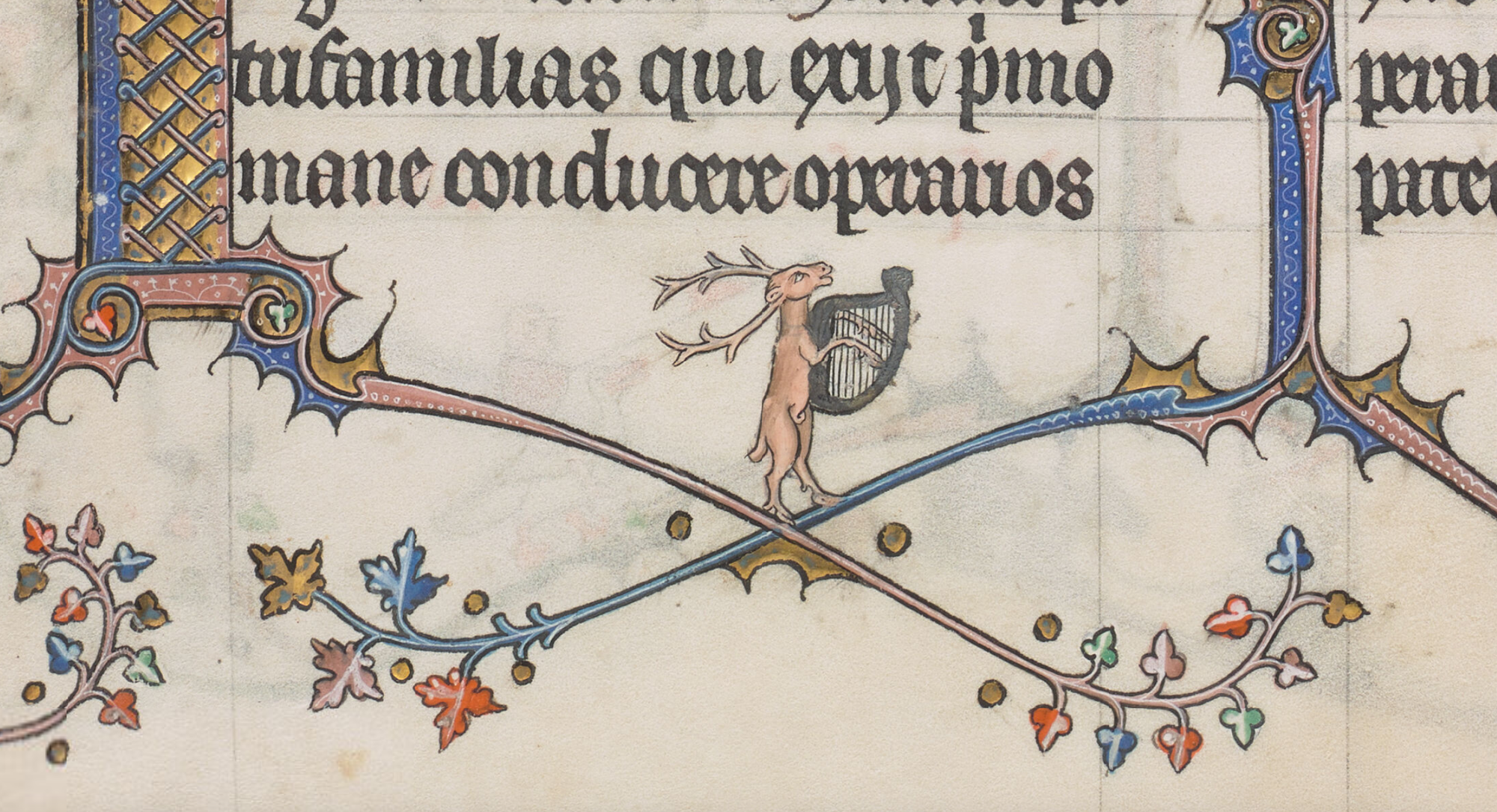
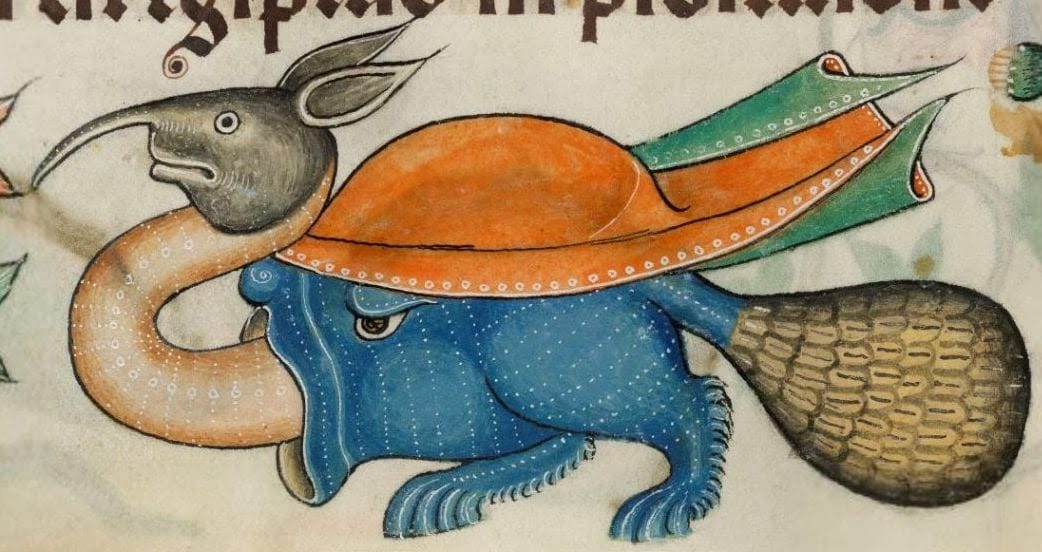
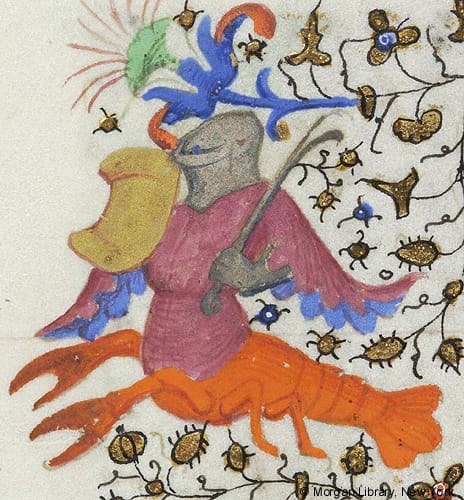
Meanwhile, in the margins of gaming culture, something surprising has been happening over the last couple of years: There’s been a tiny but growing number of releases that display a real appreciation for the aesthetic culture and art of the (European) Middle Ages, particularly illuminated manuscripts. The most notable ones are Obsidian’s Pentiment (2022), Yaza Games’ Inkulinati (2024) and Scriptorium: Master of Manuscripts (2026), as well as Legends of the Round Table by Artifice Studio (2026).
Scriptorium in particular stands out among these games since its hands-on approach lets us engage with medieval art to a degree I've never seen before. In both story and sandbox mode, the only objective here is to create illuminated manuscript pages by creatively recombining hundreds of elements, most of them lifted directly from the rich repertoire of drolleries, ornaments, initials and miniatures of actual medieval manuscripts.
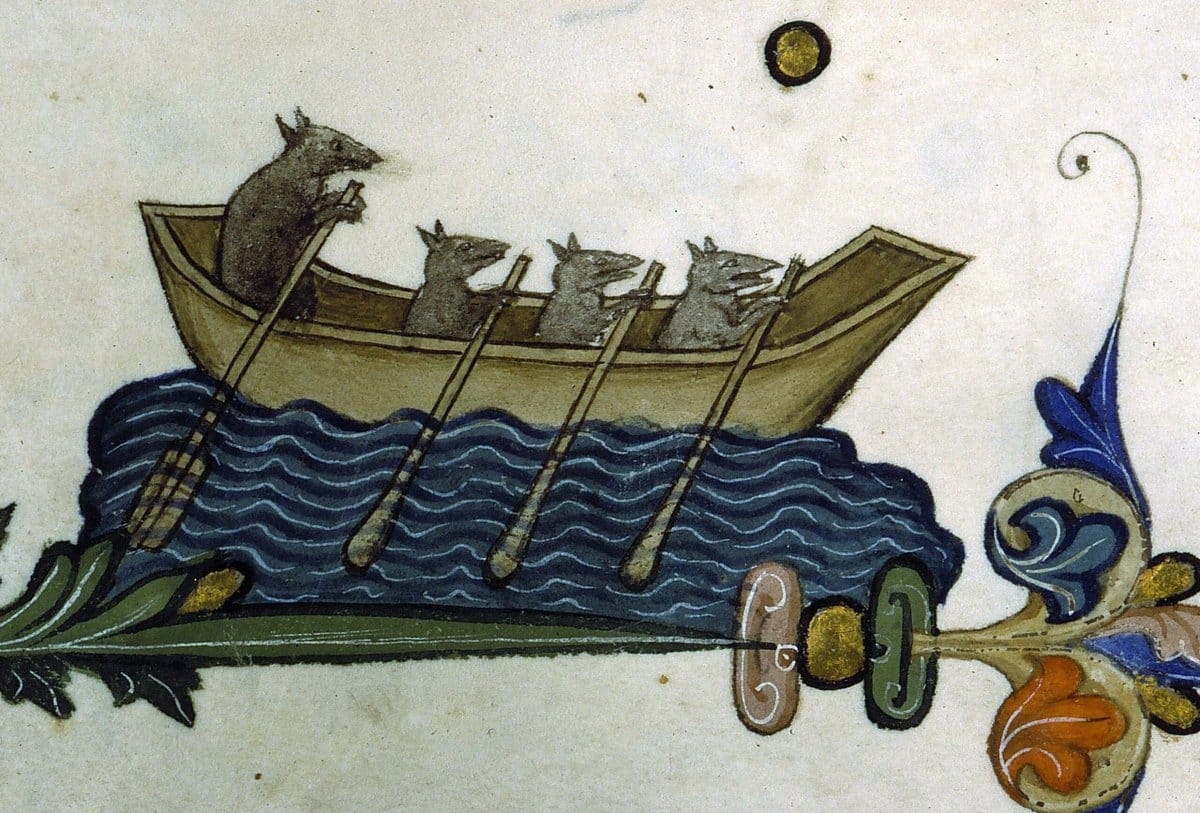
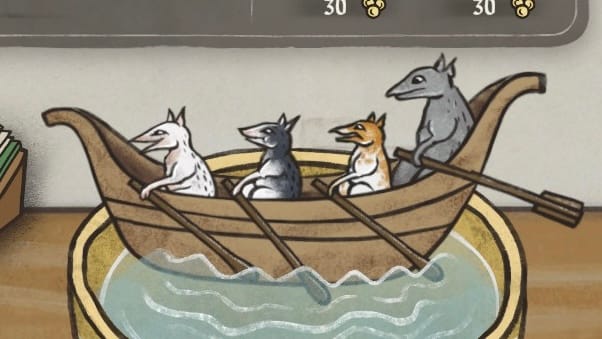
Rats rowing a boat. Left: Pontifical de Guillaume Durand, Bibliothèque Sainte-Geneviève, MS. 143, fol. 77v. Right: Scriptorium
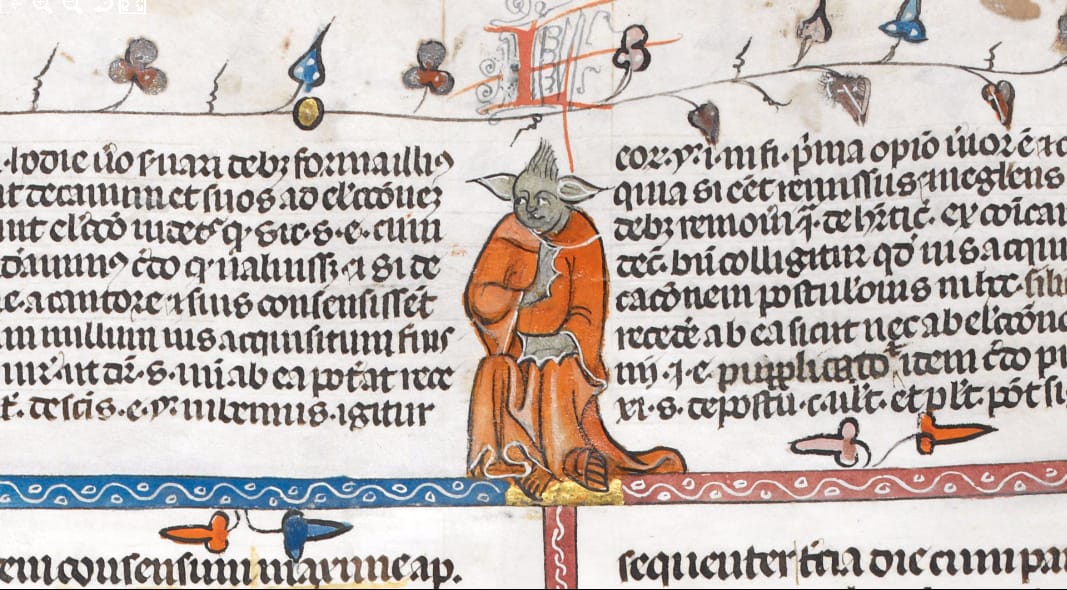
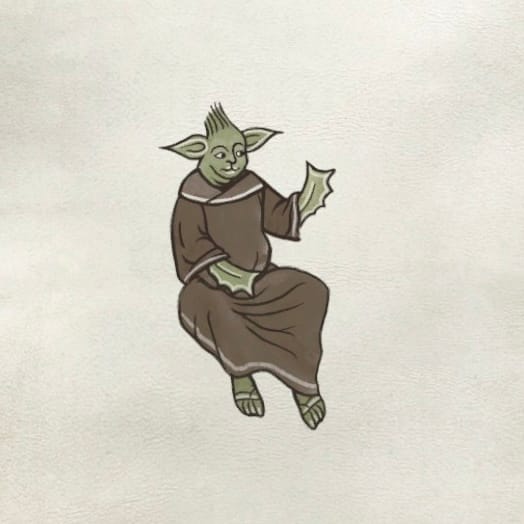
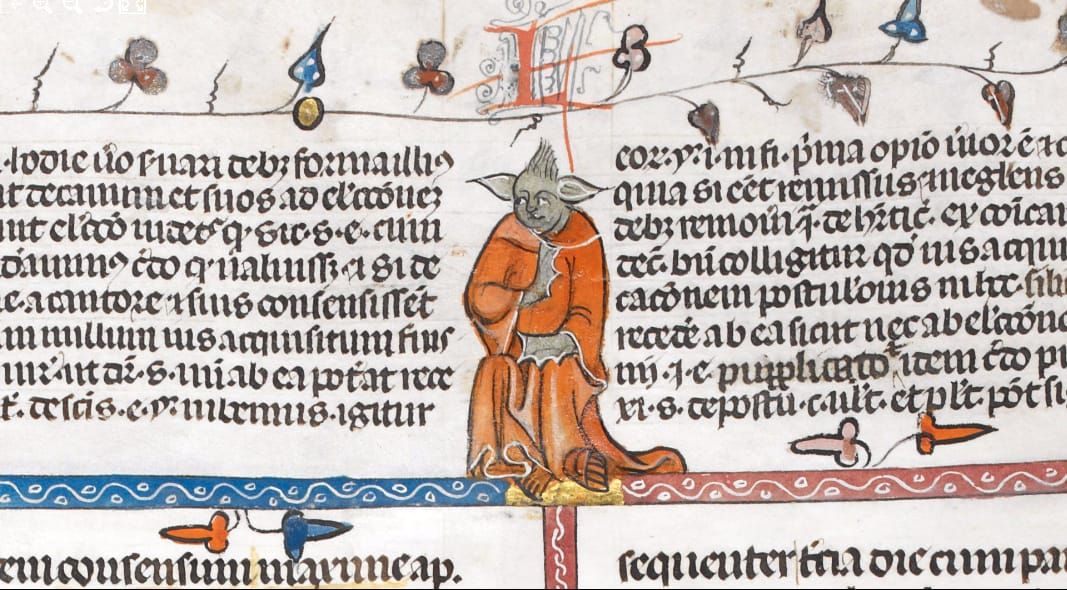
Medieval Yoda? Left: Decretals of Gregory IX, Royal MS 10 E IV fol. 30v. Right: Scriptorium
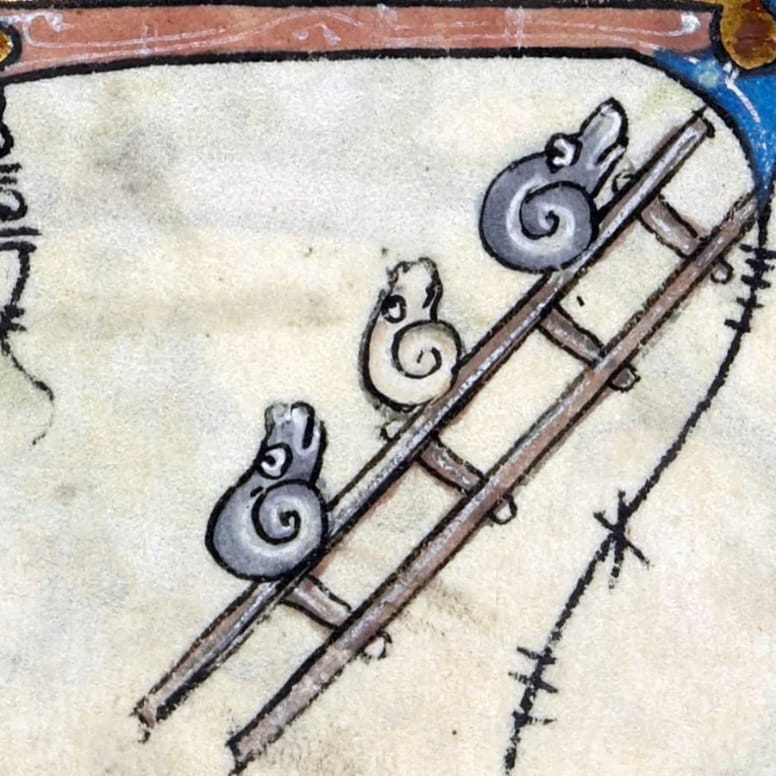
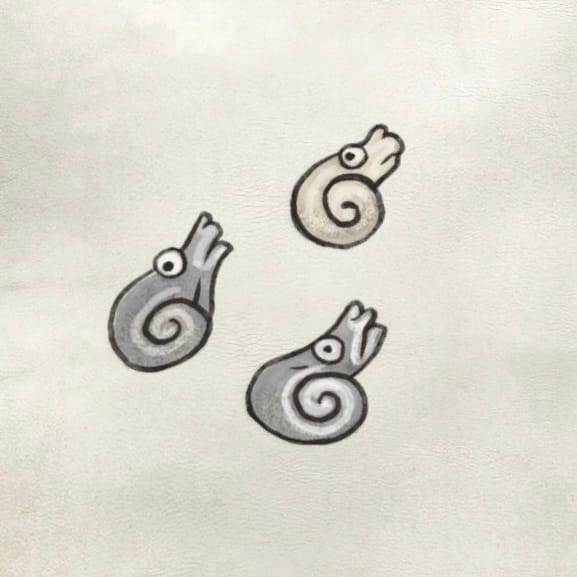
Three snails. Left: The Hours of Saint-Omer, BL Add MS 36684. Right: Scriptorium
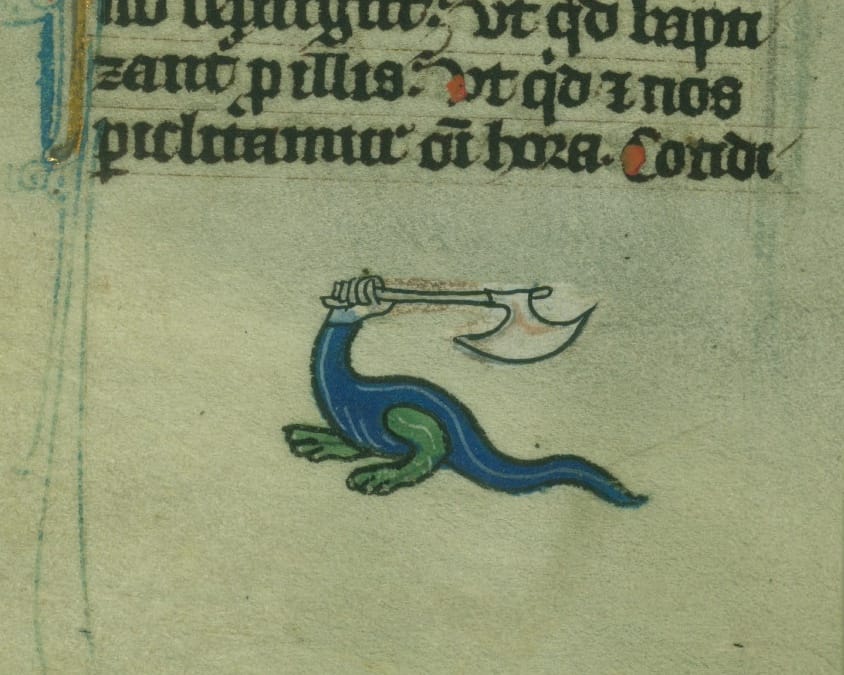
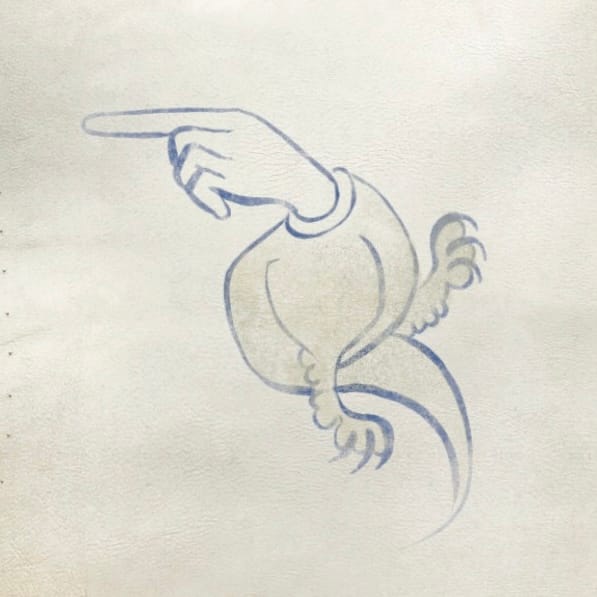
Manicules. Left: Book of Hours, The Digital Walters, W.37, fol. 187v. Right: Scriptorium
Despite its faithfulness to the source material, however, there’s one aspect which a game like Scriptorium is not equipped to convey, but which is necessary to appreciate the game on a deeper level: the broader cultural and historical context in which such manuscripts and their drolleries were created, understood and used. So let’s take a closer look at drolleries within their natural habitat.
Even at a single glance, it is clear that these weird little miscreants were meant to be irreverent and subtly transgressive. They pay no mind to proper etiquette, or even to the distinctions between human and animal. Taking a step back and looking at the page as a whole, it becomes apparent that they also blur the lines between the abstract and the figurative, or the word and the image. They flow seamlessly from abstract ornaments and treat letters as physical objects in their own strange microcosms—for example by sitting on or in so-called inhabited initials or by pointing to important passages in the text. Nothing on the page exists apart: letters, ornaments, miniatures and figures may occupy different spaces on the page, but they all are interconnected, interacting denizens of the same little world.
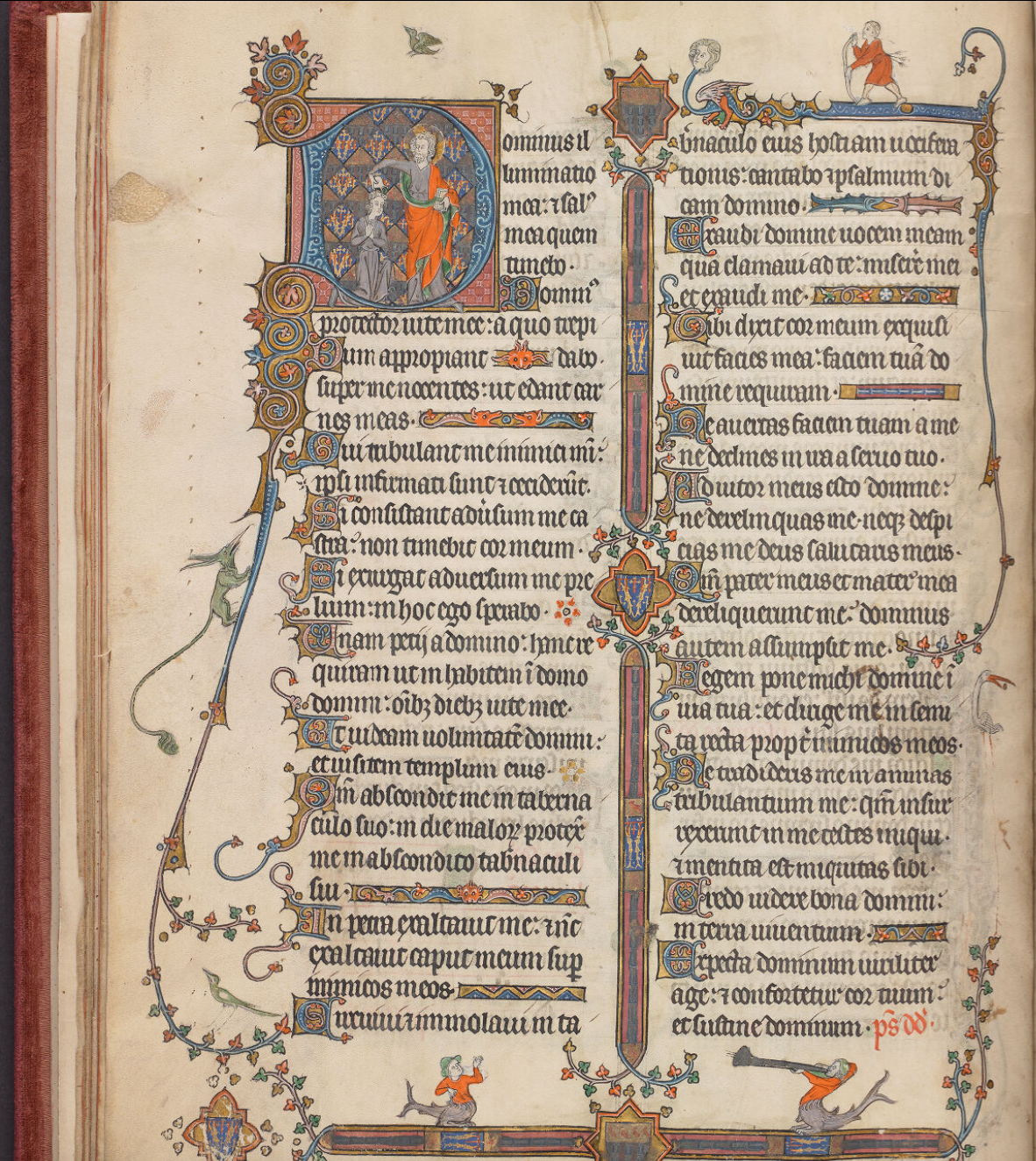
From the perspective of today’s world, where both text and images are easily reproduced, and where anthropomorphised animals usually belong in children’s cartoons or fantasy stories, it is very easy to make some fundamentally false assumptions that need to be addressed.
The most important difference between then and now is also the most obvious, but it really cannot be stressed enough: Namely that prior to the invention of the printing press at the very tail-end of the Middle Ages, every single book, and every single letter and image in it, had to be laboriously (re)created by hand. Even a no-frills, down-to-earth manuscript was a lot of hard, repetitive work for specialised workers, i.e. scribes and book painters. This means that if we go looking for the equivalent of a richly illuminated manuscript in the here and now, it’d be much closer to a Lamborghini than, say, a fancy coffee table book. Even today, an exact facsimile of a medieval manuscript can easily set you back thousands or even tens of thousands of Florins, I mean dollars.
Needless to say, this kind of investment of time, money and resources was a luxury extremely few could afford. Illuminated manuscripts were commissioned by kings and dukes or abbeys, which had their own scriptoriums. Many of them were so precious that they were treated less as books to be actually used or read, but more as prestige objects in an abbey’s treasure or a duke’s private collection. In other words, illuminated manuscripts were serious business and fit, for the most part, only for texts that carried great prestige and significance. Which meant that most examples are religious texts such as Bibles, Gospel books, or Books of Hours.
Glossary of technical terms
Drolleries (aka Grotesques): Small, often comic figures in the margins of a manuscript, especially popular in the Late Middle Ages (1250–1500).
Facsimile: A physical recreation of a manuscript, created to be as close to the original as possible. Often created for academic research, museums, or nerds with too much money.
Gothic script: A so-called minuscule script used throughout Europe during the High and Late Middle Ages.
Illumination: Decoration of a manuscript “with gold or silver or brilliant colors or with often elaborate designs or miniature pictures” (Merriam-Webster)
Inhabited initial: Decorated letter at the beginning of a chapter or paragraph which contains human or animal figures.
Manicule: A visual representation of a hand in the margins of a manuscript, often pointing towards sections of the text.
Manuscript: A document written by hand.
Marginalia: A broad term for anything found in the margins of a manuscript, e.g. notes, drolleries or decorations.
Miniature: “a painting in an illuminated book or manuscript” (Merriam-Webster). Derived from the Latin word for red lead, “minium”, since red was originally used for anything that wasn’t text.
Scriptorium: “a copying room for scribes especially in a medieval monastery (Merriam-Webster)
If we zoom back in at the drolleries, they may seem even more puzzling in this new light. What are the most iconic examples of medieval whimsy doing in such illustrious company of all places, especially considering that most of them have absolutely no connection to the actual subject matter of the text? Why dedicate so much effort to painting frivolities and belligerent critters in the margins of holy texts? Since no one in the Middle Ages thought about writing down an explanation, we simply don’t know.
A simple but unsatisfying answer might be: Like the rest of the ornamental excess, they were there to delight, astonish and impress. It has also been proposed that they may have made it easier for readers to locate a particular passage through association with some striking figure; or that they might have even served as a crutch for the memorisation of large quantities of text, providing hooks for mnemonic devices.
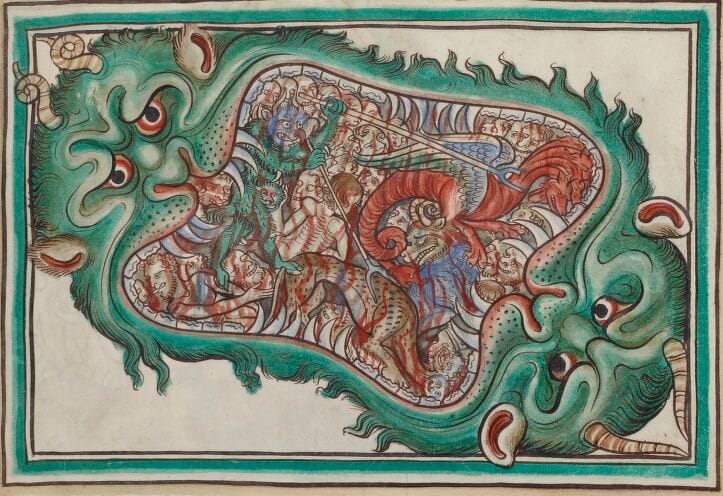
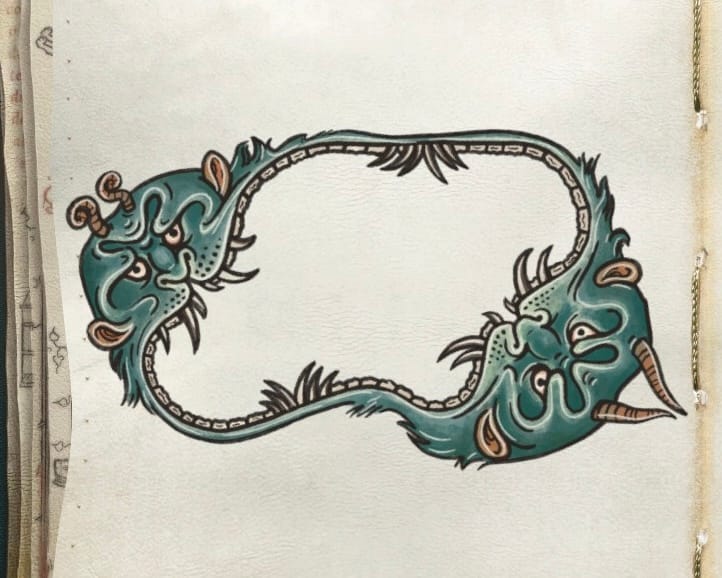
Hellmouth miniature. Left: Apocalypse glosée, Bibliothèque nationale de France, Français 403, fol. 40r. Right: Scriptorium
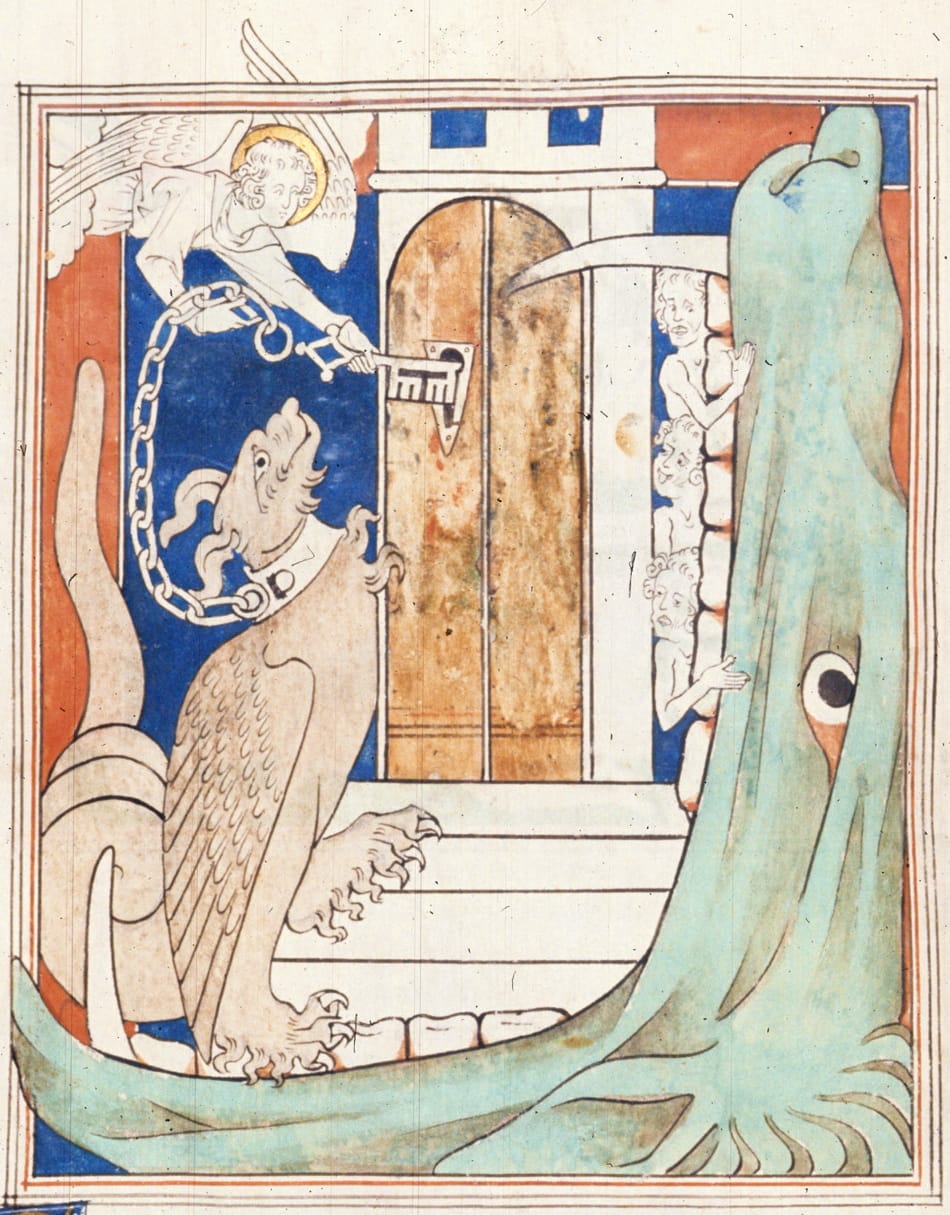
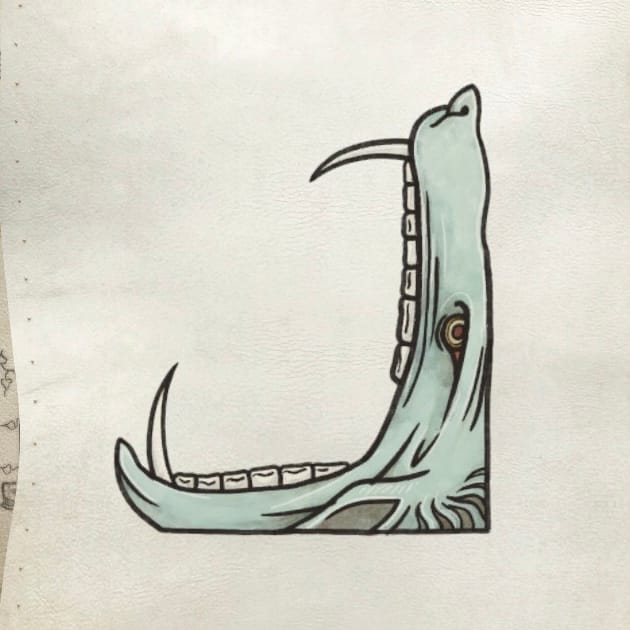
Hellmouth miniature. Left: Queen Mary Apocalypse, BL Royal MS 19 B XV fol. 38v. Right: Scriptorium
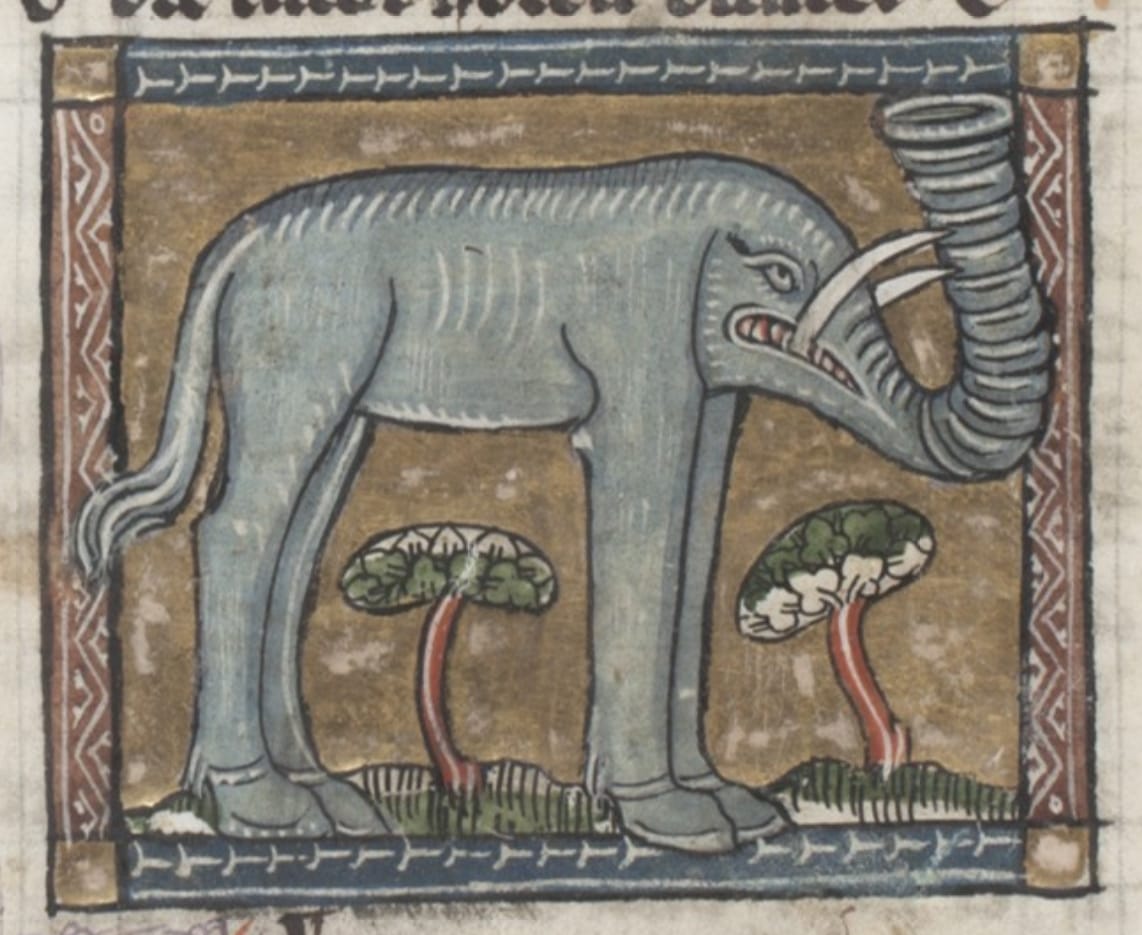
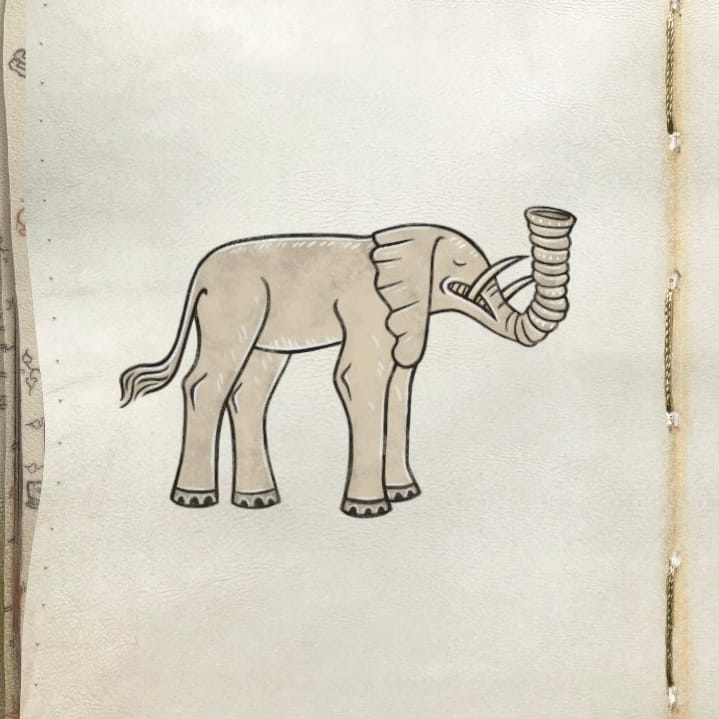
Elephant miniature. Left: Bestiary Der Naturen Bloeme, Koninklijke Bibliotheek, KB, KA 16, fol. 54r. Right: Scriptorium
While all of this may be true, it’s probably not the whole story, and it does little to explain the eccentricity of drolleries. It’s probably fair to assume that much of their allure lies exactly in the dissonance they create, which highlights both the gravitas of the religious matter as well as the absurdity of the drolleries by way of contrast. By offering a literally marginalised topsy-turvy world as a counterweight to a text, drolleries help to define the extremes of a spectrum, and by extension, the values and mores of medieval society. Or in other words: There’s no easier way to define what is deemed normal than showing what definitely isn’t.
At the same time, there’s nothing moralising about drolleries, and it’s not hard to imagine how medieval readers might have found in the drolleries a welcome and light-hearted reprieve from serious reading material precisely because of their subversive celebration of all things abnormal. In a sense, drolleries are not unlike the medieval Carnival, a time when the social order was turned upside down and people indulged in excessive eating, drinking and sex—and which was followed directly by the abstinence of solemn Lent. Whether in the margins of a manuscript or during Carnival: the subversion of social order had a time and a place, a safe frame within which it could be celebrated.
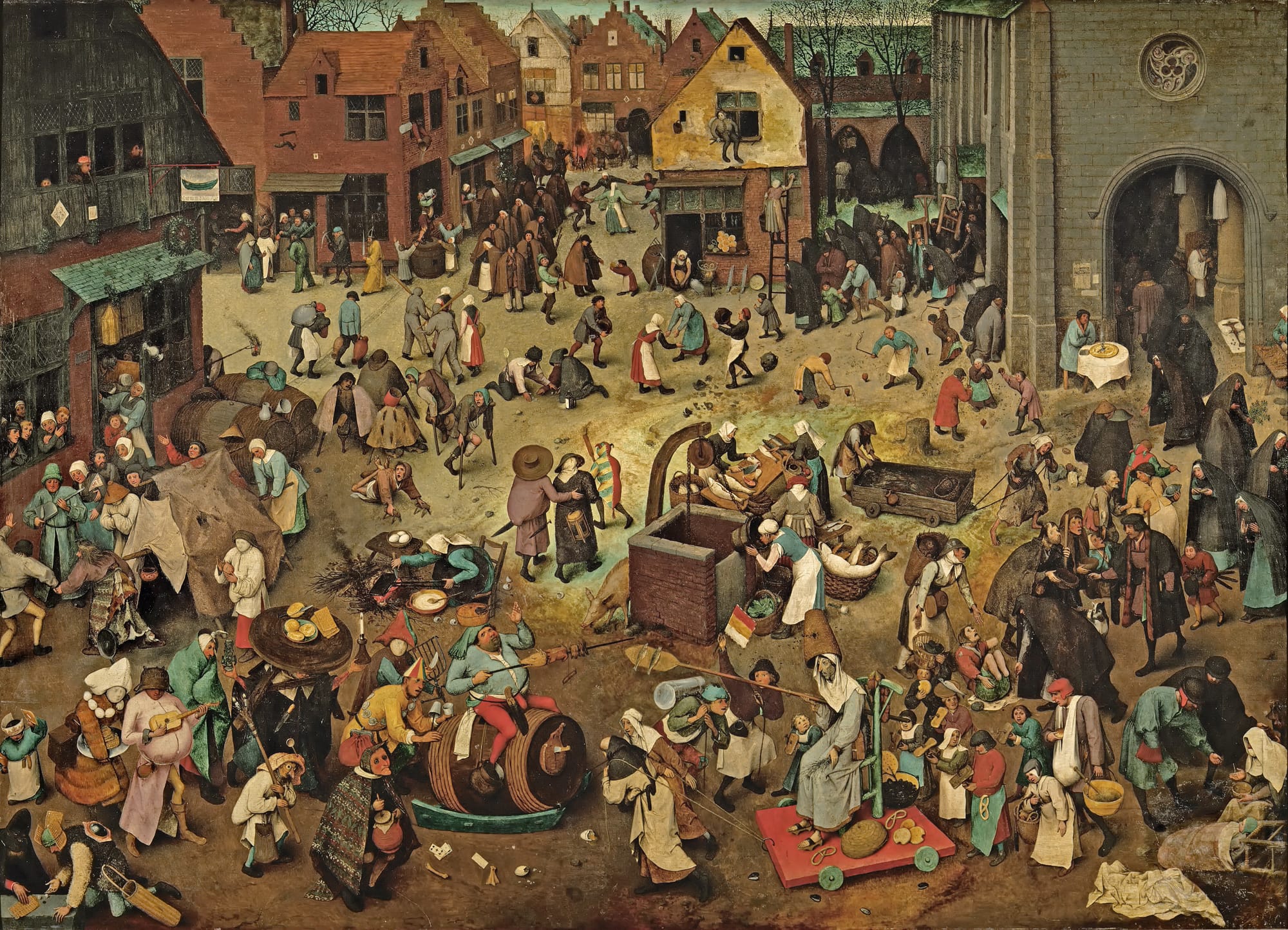
Europe during the Middle Ages is often imagined as a dreary place under the iron fist of an almost totalitarian church, where even a hint of playfulness or subversion would get you burned alive. This image is misleading for a lot of reasons which I don’t need to get into now, because it’s refuted by a simple and obvious fact: people in the Middle Ages absolutely loved to engage with society and its morals by way of the weird, the other, and the irreverent.
Drolleries are far from an exception: Take for example the satirical stories around the trickster figure Reynard the Fox, which were so incredibly popular that French dropped its old word for fox in favour of “renard”. Take the colourful beasts, monsters and hybrids encountered on maps, or in bestiaries or fantastical travelogues like The Travels of Sir John Mandeville. Take the extremely bawdy stories of Giovanni Boccaccio’s Decameron or Geoffrey Chaucer’s The Canterbury Tales, often featuring the wild (mis)adventures of extremely horny clergymen. Or take the fever-dream chaos of paintings like Hieronymus Bosch’s The Garden of Earthly Delights, populated by creatures that easily match the weirdness of drolleries. These are just a few examples.
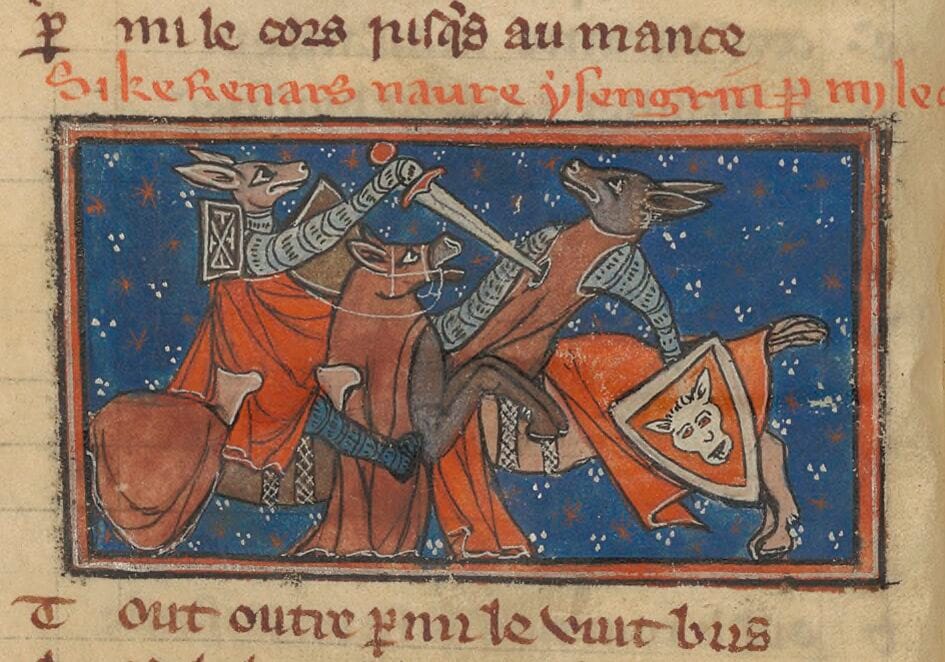
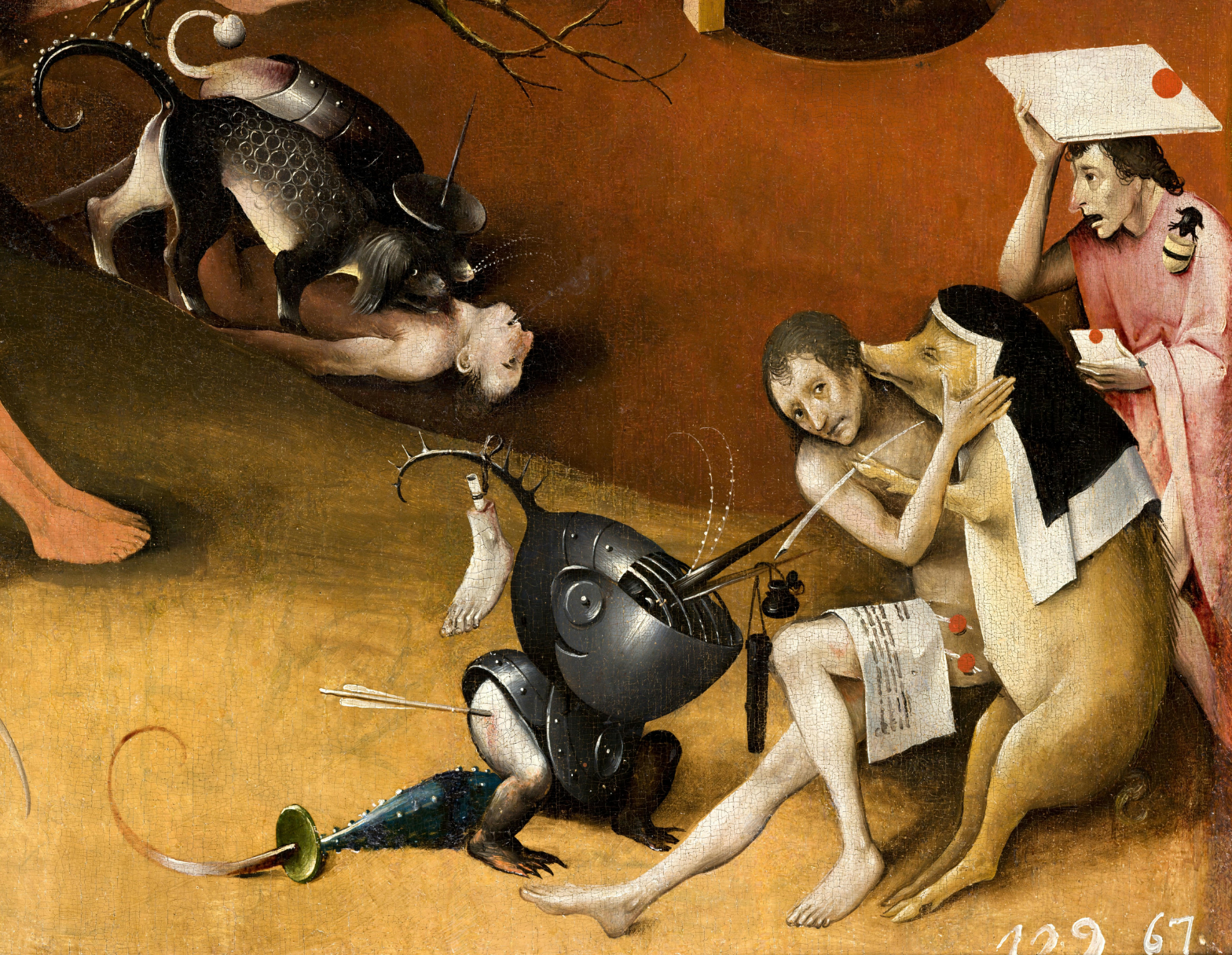
It’s finally time to circle back to Scriptorium. What makes the game so special is not just it’s interest or faithfulness to an aesthetic culture that is usually ignored, but the fact that it introduces its own playful subversions.
You’ll remember that in actual medieval manuscripts, the proper place of drolleries is in the margins, in a dialogue with but still removed from the text and miniatures occupying the centre of the page. In Scriptorium, however, the motley menagerie of walking rabbits and foxes has escaped its allotted station and takes centre stage. The game even makes a point of showing how the world of drolleries has spilled over into the ostensibly “real” world of our protagonist and book painter, who routinely takes commissions from devils, rats and foxes.
Zooming in on the minutiae and margins of history, Scriptorium breaks down the visual language of illuminated manuscripts into a rich and versatile vocabulary and encourages us to run with it. You are free to reinvent its syntax and grammar, but no matter what you do, the results will still convey the spirit and charm of medieval book art.
By giving us these tools, Scriptorium not only makes an obsolete, long dead art accessible to a modern audience, but miraculously brings it back to life for a brief moment—maybe not in a form a medieval scribe would recognise, but one that still manages to translate the often whimsical and mischievous spirit of the medieval imagination in all its weird glory.
 Andreas Inderwildi